






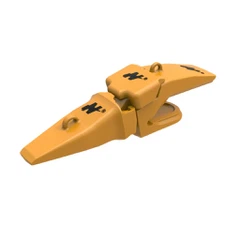


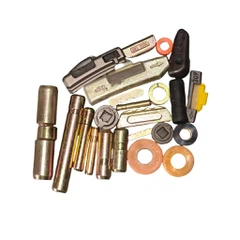

Part No.: 1U3202RC
Color: Cat Yellow,or as your required
Logo: "N" logo, "FHND" logo, Customized OEM logo
Unit Weight: 1.5KG
Bucket Teeth and Adapters
FH-ND: Your Professional Bucket Teeth and Adapters Manufacturer!
FH-ND was founded in 2005, located in Ningbo which is the famous city of export in China. After the development with a long history, we have become one of the famous manufacturers of ground engaging tools(G.E.T) in construction machinery and mining machinery areas. FH-ND is also an OEM and supplies high-quality wear parts to many famous companies in the world.
-
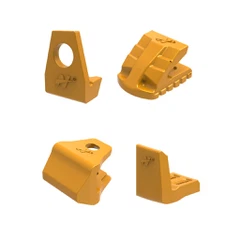
![1U3202RC J200 Cat Style Rock Chisel Excavator Bucket Teeth]()
-
![207-70-14151 Komatsu Style PC300 Excavator Bucket Tips Bucket Teeth]() 207-70-14151 Komatsu Style PC300 Excavator Bucket Tips Bu...Part No.: 207-70-14151read more
207-70-14151 Komatsu Style PC300 Excavator Bucket Tips Bu...Part No.: 207-70-14151read more
Color: Cat Yellow,or as your required
Logo: "N" logo, "FHND" logo, Customized OEM logo
Unit Weight: Welcome to inquiry -
![Daewoo DH130 Excavator Tiger Teeth 2713-1221TL]() Daewoo DH130 Excavator Tiger Teeth 2713-1221TLPart No.: 2713-1221TLread more
Daewoo DH130 Excavator Tiger Teeth 2713-1221TLPart No.: 2713-1221TLread more
Color: Cat Yellow,or as your required
Logo: "N" logo, "FHND" logo, Customized OEM logo
Unit Weight: Welcome to inquiry -
![61N8-31310 Hyundai R290 Excavators Bucket Tooth]() 61N8-31310 Hyundai R290 Excavators Bucket ToothPart No.: 61N8-31310read more
61N8-31310 Hyundai R290 Excavators Bucket ToothPart No.: 61N8-31310read more
Color: Cat Yellow,or as your required
Logo: "N" logo, "FHND" logo, Customized OEM logo
Unit Weight: Welcome to inquiry -
![331/62841 JCB Style 2CX Mini Excavator Digger Bucket Teeth]() 331/62841 JCB Style 2CX Mini Excavator Digger Bucket TeethPart No.: 331/62841read more
331/62841 JCB Style 2CX Mini Excavator Digger Bucket TeethPart No.: 331/62841read more
Color: Cat Yellow,or as your required
Logo: "N" logo, "FHND" logo, Customized OEM logo
Unit Weight: Welcome to inquiry -
![993/99647.993996471CB Tooth Tip V39 SYL]() 993/99647.993996471CB Tooth Tip V39 SYLPart No.:993/99647.993996471CB Tooth Tip V39 SYLread more
993/99647.993996471CB Tooth Tip V39 SYLPart No.:993/99647.993996471CB Tooth Tip V39 SYLread more
Color: Black; custom color available per your request
Unit Weight:9.8 KG
Brand:JCB -
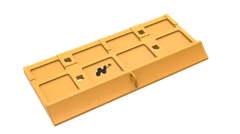
![Komatsu Track Shoe/Grouser Shoe 20T-32-77410 20T-32- 41210 201-32-15111]() Komatsu Track Shoe/Grouser Shoe 20T-32-77410 20T-32- 4121...Part No.: 20T-32-77410 20T-32- 41210 201-32-15111read more
Komatsu Track Shoe/Grouser Shoe 20T-32-77410 20T-32- 4121...Part No.: 20T-32-77410 20T-32- 41210 201-32-15111read more
Color: Yellow, or as required
Logo: "N" logo, "FHND" logo, Customized OEM logo
Unit Weight: Welcome to inquire -
![Komatsu Weld-on Center Adapter 1040P025 1050P040]() Komatsu Weld-on Center Adapter 1040P025 1050P040Part No.:Komatsu Weld-on Center Adapter 1040P025 1050P040read more
Komatsu Weld-on Center Adapter 1040P025 1050P040Part No.:Komatsu Weld-on Center Adapter 1040P025 1050P040read more
Color: Standard Cat Yellow; custom color available per your request
Logo: Optional "N" mark, "FHND" mark or customized OEM... -
![HEKH1175 23 HEKH1200-40 Komatsu KH-series Weld-on Adapter]() HEKH1175 23 HEKH1200-40 Komatsu KH-series Weld-on AdapterPart No.:HEKH1175 23 HEKH1200-40 Komatsu KH-series Weld-on Adapterread more
HEKH1175 23 HEKH1200-40 Komatsu KH-series Weld-on AdapterPart No.:HEKH1175 23 HEKH1200-40 Komatsu KH-series Weld-on Adapterread more
Color: custom color available per your request
Logo: Optional "N" mark, "FHND" mark or customized OEM logo... -
![Esco Center Adapter 5839W 65SV2/5896W-70SV2]() Esco Center Adapter 5839W 65SV2/5896W-70SV2Part No.:Esco Center Adapter 5839W 65SV2/5896W-70SV2read more
Esco Center Adapter 5839W 65SV2/5896W-70SV2Part No.:Esco Center Adapter 5839W 65SV2/5896W-70SV2read more
Color: Standard Cat Yellow; custom color available per your request
Logo: Optional "N" mark, "FHND" mark or customized OEM... -
![Esco V Adapter 3881-V29 3810A V33 3811-V43]() Esco V Adapter 3881-V29 3810A V33 3811-V43Part No.:Esco V Adapter 3881-V29 3810A V33 3811-V43read more
Esco V Adapter 3881-V29 3810A V33 3811-V43Part No.:Esco V Adapter 3881-V29 3810A V33 3811-V43read more
Color: Standard Cat Yellow; custom color available per your request
Logo: Optional "N" mark, "FHND" mark or customized OEM logo... -
![Esco Super V Tooth 254823A1 372160A1 241816A1]() Esco Super V Tooth 254823A1 372160A1 241816A1Part No.:Esco Super V Tooth 254823A1 372160A1 241816A1read more
Esco Super V Tooth 254823A1 372160A1 241816A1Part No.:Esco Super V Tooth 254823A1 372160A1 241816A1read more
Color: Standard Cat Yellow; custom color available per your request
Logo: Optional "N" mark, "FHND" mark or customized OEM...


Why Choose Us
Rich Experience
Ningbo Fenghua ND Machinery Co., Ltd. was established in 2005 and has more than 10 years of experience in the research and development of wear-resistant castings, including bucket teeth, tooth seat edge plates, and other products for construction machinery.
Broad Market
Our parts are already exported to more than 50 countries in the world, mainly to Canada, the USA, Australia, Spain, Sweden, UK, Poland, Italy, Russia, Ukraine, Saudi Arabia, Kuwait, U.A.E., Peru, Chile, Brazil, Argentina, Egypt, Sudan, Algeria, South Africa, India, Myanmar, Korea, Singapore, etc.
Wide Product Range
The company offers a comprehensive range of products, covering most of the world's excavators, bulldozers, loaders, graders, and other wear-resistant accessories.
Quality Assurance
Using self-developed high-strength, high-quality wear-resistant steel, coupled with scientific and efficient production processes and strict quality management procedures, the company ensures that its products provide customers with high quality and cost-effective solutions.
Brief Introduction to Bucket Teeth and Adapters
We stock a wide variety of teeth and adaptors for loaders, excavators, and skid steers. Teeth and adapters are almost always cast products that are hardened and more wear-resistant than carbon steel. The size of the adapter coincides with the tooth size. The size is based on the thickness of the frog or base edge. Most adapters are welded on but we have a selection of bolt-on adapters available.
Bucket Teeth vs Adaptors
Bucket Teeth
Bucket teeth are as important as human teeth. They are installed in the buckets to protect the bucket. As wear parts, the smaller the area, the greater the pressure. Therefore buckets can excavate the material much easier. Buckets can work more smoothly when encountering hard objects, and improve work efficiency.
Adaptors
Suitable adaptors can maximize the wear life of bucket teeth. The fitness between bucket teeth & adapters is very important. Poor assembly will lead to the pressure back onto the pin, which can create a weak point. The bucket teeth will break easily and wear prematurely.
When it comes to buckets, generally we suggest you select teeth and adapters that belong to the same brand or the same system.
Advantages of Bucket Teeth and Adapters
Durable
High-quality bucket teeth are designed to be durable and resistant to wear and tear. This means they can withstand the demanding conditions that excavators often face on construction sites. With their superior strength, these teeth can handle heavy loads and tough materials without breaking or wearing down quickly.
Efficient
Using high-quality bucket teeth enhances efficiency. These teeth are specifically engineered to improve digging and loading capabilities, allowing you to complete tasks more efficiently. The sharpness and precision of these teeth ensure better penetration into the ground or material, resulting in smoother operations and faster work progress.
Money Saving
Moreover, investing in high-quality bucket teeth can save you money in the long run. While they may have a higher initial cost compared to lower quality options, their durability means they last longer before needing replacement. This reduces downtime for maintenance and replacement costs over time.
Safe
Additionally, utilizing high-quality bucket teeth contributes to improved safety on the job site. Designed with secure attachments and sturdy connections, these reliable tools minimize the risk of accidents or equipment failures during operation.
Types of Bucket Teeth and Adapters
When choosing bucket teeth for your machine, you'll want to consider the terrain you're working in and how much digging power you need.
Chisel Bucket Tooth
Chisel bucket teeth are the most common type of bucket teeth. The teeth have a broad design that narrows into a flat chisel shape at the working edge of the tooth. Their wide shape, which flattens into a broad chisel rather than a sharp point, results in a very large working surface area. This enhanced surface area makes chisel teeth more resistant to abrasive terrain and they tend to wear down more slowly. Since chisel teeth have a flat working edge, they leave behind a smooth bottom when used for digging trenches or leveling terrain. This makes them ideal for clearing, scraping and cleaning surfaces. Choose this design if you are using a skid steer or mini excavator for general hauling or leveling and trenching tasks in loosely compacted soil.
Rock Chisel Bucket Tooth
Like standard chisel teeth, rock chisel bucket teeth have a somewhat broad design that narrows into a flat working edge. Unlike standard chisel teeth, however, rock chisel teeth are designed for superior penetration and durability. In addition, rock chisel teeth frequently have a ribbed design, which provides additional strength and penetration capabilities. Their all-purpose design makes them well suited to clearing and scraping hard or rocky terrain. Choose rock chisel teeth if you are using a skid steer or loader on rocky terrain that requires good penetration.
Single Tiger Bucket Tooth
Single tiger bucket teeth have a spike design that narrows into a pointed working edge. This design provides superior penetration capabilities, but results in poor durability. Compared to chisel designs, single tiger teeth have much better penetration capabilities. The extremely narrow working edge focuses the power of your machine onto a single point, allowing you to break through tightly compacted terrain. Since they are constructed of less material, single tiger teeth are not very durable and wear down quickly. They also do not leave a smooth bottom, so they aren't ideal for grading and leveling. Choose single tiger teeth if you are using a loader or skid steer for digging and trenching in rocky or tightly compacted terrain.
Twin Tiger Bucket Tooth
Twin tiger teeth have a two-pronged design, providing twice as much penetration as single tiger bucket teeth. These v-shaped teeth excel at penetrating hard surfaces like rock or frost, but they're harder on your equipment and need to be replaced frequently. For applications where penetration is the main concern, twin tiger teeth are a great solution. They can handle extremely hard surfaces such as rock, hardpan and frost. Choose twin tiger teeth if you're using a loader to dig and trench in challenging surfaces where superior penetration is required.
Choosing the Right Bucket Teeth and Adapters
When it comes to optimizing the performance and durability of your excavator or loader, selecting the right bucket teeth adapter is crucial. These small but essential components play a significant role in the efficiency and effectiveness of your earthmoving equipment.
Material Quality
One of the primary considerations when choosing bucket teeth adapters is the material quality. The adapter should be made from high-quality, durable materials that can withstand the harsh conditions of excavation and loading. Common materials include alloy steel, which offers a good balance of strength and toughness. The material should resist wear, impact, and abrasion to ensure a longer lifespan for the adapter.
Adapter Type
Bucket teeth adapters come in various types, and selecting the right one depends on your specific needs and the type of work you're engaged in. The most common types include:
Teeth Compatibility
Ensure that the chosen bucket teeth adapter is compatible with the teeth you plan to use. Different teeth designs are suitable for various tasks, and the adapter must accommodate the specific tooth profile for optimal performance.
Easy Replacement and Installation
Efficiency on the job site is crucial, and easy replacement and installation of bucket teeth adapters contribute significantly to minimizing downtime. Choose adapters that can be quickly and securely attached and detached, allowing for efficient maintenance and replacement when needed.
Size and Fit
Selecting the right size and fit is essential for the overall effectiveness of the bucket teeth adapter. A poorly fitting adapter can lead to reduced digging performance, increased wear, and potential damage to both the adapter and the bucket. Ensure that the chosen adapter matches the specifications of your equipment and bucket.
Brand Reputation and Quality Assurance
Opt for bucket teeth adapters from reputable manufacturers with a proven track record in the industry. A brand with a reputation for producing high-quality, reliable products is more likely to provide adapters that meet or exceed industry standards.
How to Use Bucket Teeth and Adapters
Match Your Bucket Teeth to the Machine and Digging Conditions
The size, shape and profile of your bucket teeth must match the adaptors and machine they are fitted to, as well as the digging conditions they will be operating in. The right bucket tooth profile will penetrate the ground more easily and allow material to flow into the bucket. And full buckets drive productivity. Undersized or oversized bucket teeth will see your machine struggle to penetrate the ground properly, putting undue stresses on your machine.
Furthermore, some bucket teeth are designed specifically for penetration, or abrasion, while others are general purpose all-rounders. Others are made for loaders, and others for excavators. A tooth that works well on an excavator will have a completely different profile than one used for loaders. By ensuring you have the right bucket tooth system for your machine and associated digging conditions, you will find the sweet spot to boost productivity and reduce costs.
Balance Hardness and Impact Strength
Bucket teeth and adaptors should not break. If they do you might be using the wrong parts or there could be a quality control issue. Every time you change a bucket tooth it will lead to downtime and production loss. And if the broken component ends up going through the plant then it can cause hundreds of thousands of dollars' worth of damage. If you are certain you are using the right bucket teeth for your machine and the digging conditions and are still seeing breakages, then your bucket teeth may be too hard. Generally, the harder the bucket tooth the better it will wear, however this must be balanced against impact resistance as harder bucket teeth are also more brittle and susceptible to breaking. It is a balancing act in matching wear properties with impact strength and if you are seeing bucket teeth breakages you may want to talk to your supplier about what mechanical properties they are placing into bucket teeth in the casting process.
Match Bucket Teeth with Adaptors
Bucket teeth and adaptors must be designed to work in unison and if they are not matched correctly you can expect premature wear or breakages. One adaptor can work with up to around eight different tooth styles, however it's important to ensure these will meet your intended use. Furthermore, if an adaptor is worn out, you will see tooth breakages, even if you are using the right bucket teeth for the machine and digging conditions. Another consideration is matching adaptors to bucket teeth that are in supply.
Factor Workplace Health and Safety (WHS)
Changing bucket teeth is inherently dangerous, especially when they require a sledgehammer. There has been a major push in recent years to make bucket teeth systems safer and simpler to install and replace. Another way to drive safety is with high quality, longer-lasting bucket teeth that have longer changeout periods, because "the safest job is the one you don't have to do".
Our Factory
The company currently employs approximately 350 skilled professionals, boasting an annual output exceeding 20,000 tons.

Ultimate FAQ Guide to Bucket Teeth and Adapters
We're professional bucket teeth and adapters manufacturers and suppliers in China, specialized in providing high quality customized service. We warmly welcome you to buy bucket teeth and adapters at competitive price from our factory.