



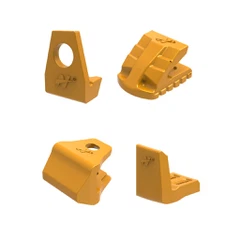
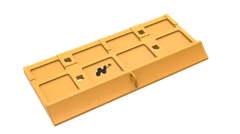



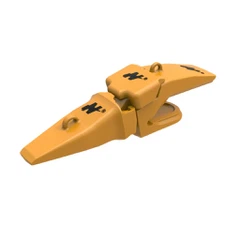


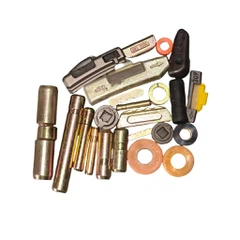

Color: Cat Yellow,or as your required
Logo: "N" logo, "FHND" logo, Customized OEM logo
Unit Weight: Welcome to inquiry
Bolts and Nuts
FH-ND: Your Professional Bolts and Nuts Manufacturer!
FH-ND was founded in 2005, located in Ningbo which is the famous city of export in China. After the development with a long history, we have become one of the famous manufacturers of ground engaging tools(G.E.T) in construction machinery and mining machinery areas. FH-ND is also an OEM and supplies high-quality wear parts to many famous companies in the world.
-
![High Tensile Industrial Plow Bolts And Nuts]()
-
![High Tensile Track Bolts And Nuts Grade 8.8 10.9 12.9]() High Tensile Track Bolts And Nuts Grade 8.8 10.9 12.9Color: Cat Yellow,or as your requiredread more
High Tensile Track Bolts And Nuts Grade 8.8 10.9 12.9Color: Cat Yellow,or as your requiredread more
Logo: "N" logo, "FHND" logo, Customized OEM logo
Unit Weight: Welcome to inquiry -
![High Strength Excavator Sprocket Segment Bolts And Nuts]() High Strength Excavator Sprocket Segment Bolts And NutsColor: Cat Yellow,or as your requiredread more
High Strength Excavator Sprocket Segment Bolts And NutsColor: Cat Yellow,or as your requiredread more
Logo: "N" logo, "FHND" logo, Customized OEM logo
Unit Weight: Welcome to inquiry -
![Grader Blade Cutting Edges Grader Hard Plow Bolts And Nus]() Grader Blade Cutting Edges Grader Hard Plow Bolts And NusPart number: 5D9553read more
Grader Blade Cutting Edges Grader Hard Plow Bolts And NusPart number: 5D9553read more
Color: Cat Yellow,or as your required
Logo: "N" logo, "FHND" logo, Customized OEM logo
Unit Weight: Welcome to inquiry -
![82600303 And 13400701z JCB Bucket Teeth Bolts And Nuts Plough Bolt]() 82600303 And 13400701z JCB Bucket Teeth Bolts And Nuts Pl...Color: Cat Yellow,or as your requiredread more
82600303 And 13400701z JCB Bucket Teeth Bolts And Nuts Pl...Color: Cat Yellow,or as your requiredread more
Logo: "N" logo, "FHND" logo, Customized OEM logo
Unit Weight: Welcome to inquiry -
![332-C9951 And 1340/0701z JCB Side Teeth High-Strength Plow Bolts And Nuts]() 332-C9951 And 1340/0701z JCB Side Teeth High-Strength Plo...Color: Cat Yellow,or as your requiredread more
332-C9951 And 1340/0701z JCB Side Teeth High-Strength Plo...Color: Cat Yellow,or as your requiredread more
Logo: "N" logo, "FHND" logo, Customized OEM logo
Unit Weight: Welcome to inquiry -
![Excavator Bucket Tooth Plow Bolt JCB Tooth Bolt]() Excavator Bucket Tooth Plow Bolt JCB Tooth BoltColor: Cat Yellow,or as your requiredread more
Excavator Bucket Tooth Plow Bolt JCB Tooth BoltColor: Cat Yellow,or as your requiredread more
Logo: "N" logo, "FHND" logo, Customized OEM logo
Unit Weight: Welcome to inquiry


Why Choose Us
Rich Experience
Ningbo Fenghua ND Machinery Co., Ltd. was established in 2005 and has more than 10 years of experience in the research and development of wear-resistant castings, including bucket teeth, tooth seat edge plates, and other products for construction machinery.
Broad Market
Our parts are already exported to more than 50 countries in the world, mainly to Canada, the USA, Australia, Spain, Sweden, UK, Poland, Italy, Russia, Ukraine, Saudi Arabia, Kuwait, U.A.E., Peru, Chile, Brazil, Argentina, Egypt, Sudan, Algeria, South Africa, India, Myanmar, Korea, Singapore, etc.
Wide Product Range
The company offers a comprehensive range of products, covering most of the world's excavators, bulldozers, loaders, graders, and other wear-resistant accessories.
Quality Assurance
Using self-developed high-strength, high-quality wear-resistant steel, coupled with scientific and efficient production processes and strict quality management procedures, the company ensures that its products provide customers with high quality and cost-effective solutions.
Brief Introduction to Bolts and Nuts
Nuts and bolts are two types of fasteners used to join two parts together. A nut is a small metal object with a hole in the center surrounded by spirally cut grooves known as threads. Nuts are usually hexagonal in shape, which makes them easy to grip from all sides. They are used as fasteners for mating bolts and are held together by the frictional combination of their threads. Nuts come in a variety of styles, including hex, cap, coupler, wing, turnbuckle, and lock. A bolt is a long piece of metal with a rounded shank for a body that is threaded in a helical (circular) fashion. The bolt body has a head at one end that allows it to be twisted into an object or nut. Bolts come in different length sizes while nuts are standard sizes. Bolts are subjected to tensile forces, and it is the tensile stress that causes them to fail.
Advantages of Bolts and Nuts
Common in Use
The main advantage of nuts and bolts is that they are very common in use and are readily available everywhere. These are included in those essential tools with which everyone is familiar.
Simple to Install
The second advantage of using nuts and bolts is that they are very simple to install. One does not need to go for special guides in order to understand the method to install them. They are very easy to handle and install. One can do it by himself or with the help of some other fellow easily in case of huge nuts and bolts. And same is the case with the loosening of nuts and bolts. The small nuts and bolts are easily loosened with the help of hammers only. The wrenches are also used to loosen the nuts and bolts and are very easy to handle.
Resistance to Corrosion
The third important factor that adds to the advantages of using nuts and bolts is their resistance to corrosion. When these nuts and bolts are manufactured, they are plated with a coating of zinc solution that prevents the steel from corrosion. This leads to its longevity and ensures maximum strength for a long period of time.
Do Not Require Heat Treatment
The fourth advantage is that they do not require heat treatment during the process of fastening. Most of the time, the fastening tools are provided with heat treatment to ensure that they are correctly fixed, but such is not the case in the usage and installation of nuts and bolts.
Types of Bolts and Nuts
- Types of Bolts
Different bolts have different functions. Here are some of the most popular kinds of bolts used in DIY projects.
Bolts with Hex Heads
A hex bolt's hexagonal head serves as a surface for grasping or twisting the bolt with a wrench, socket and ratchet, or drill/driver. Some hex bolts have threads that extend the whole length of the shank and are often used in threaded holes. They provide high grip strength because they distribute tension over the whole bolt. The thicker, unthreaded segment of a partially threaded bolt provides strength to the fastening process. Partially threaded hex bolts are also beneficial for operations that need more force to hold the work pieces together. Hex-head bolts are commonly used in construction and automotive applications.
Bolts for Carriage
The domed head of a carriage bolt provides it a smooth, polished appearance. It also adds a layer of safety and security since it does not have a driving surface like a hex-head bolt. Carriage bolts are fastened with washers and hex nuts after being inserted into predrilled holes. The nut is secured to the work piece by a square area under the head, allowing you to attach it with a single wrench, socket, or driver bit. Carriage bolts are used in a wide range of applications, such as decks, furniture, and outdoor playsets.
Bolts for Anchoring
Anchor bolts are classified as either those meant for use in concrete foundations or those intended for use in a wall. L-bolts are intended for usage in wet concrete. While the concrete cures, the bolt is kept in place. L-bolts may be used to secure a deck post to a concrete pad. To secure retrofit anchor bolts in existing concrete, an adhesive is employed. When drilling into a wall stud is not possible, toggle bolts provide support for hanging things.
U-Bolts
U-bolts have two threaded shanks with a rounded or flattened appearance. Rounded U-bolts are used to secure pipe or conduit to a surface, while squared U-bolts are used to fasten things to a surface, such as a square post. The U-bolt is held in position against the item being secured by two nuts and a metal plate.
Bolts for the Eyes
Eye bolts have a loop or ring end and a threaded end for attaching a chain or rope to a wood, metal, or concrete surface. Eye bolts are designed to be used in pre-drilled holes and come with a matching nut. Screw eyes are similar in appearance but have coarser self-tapping threads and a pointed tip that enables them to be driven into a pilot hole in a woodwork item.
Bolts for Hanging
A hanger bolt is a fastener that does not have a head. It has machined threads on one end that accept a nut. The bolt's coarse, self-tapping threads and a point on the other end allow it to be driven into a predrilled hole in wood or comparable material.
Bolts that Split
Split bolts are designed to provide secure electrical connections. They enable the splicing of two wires as well as the connection of cables to terminals. Split bolts made of diverse materials work with a variety of wire types. Make sure your bolt is rated for the kind of wire you're using.
Bolts for the Body
Body bolts are often used in the automotive industry. They are used to attach fenders and other components to a car's body. They have a hex head, a threaded shank, and a washer.
Bolts for Axles
Axle bolts attach wheels to machines like lawnmowers and wagons. The shank's threaded end receives a locking nut, while the smooth section near the head allows the wheels to rotate.
- Types of Nuts
Nuts work with different types of bolts to secure the fasteners. Although some nuts may be tightened by hand, the majority are designed to be driven using a wrench or socket driver. Here are some of the most often used bolt hardware nuts.
Hexagon Nuts
Hex nuts have a six-sided driving surface. They're a common sort of nut used to connect wood and metal components with bolts of the same size and thread type.
Lock Nuts
Nylon lock nuts have a hexagonal head with an integrated nylon ring. When you tighten a lock nut onto a bolt, the threading of the bolt displaces or deforms the ring, causing friction and preventing loosening from slippage or vibration. A castle nut is a kind of locking nut that works by putting a pin or clip into a hole in the bolt. Rotation is restricted when notches etched into the nut come to rest on the pin.
Wing Nuts
Wing nuts are designed to be tightened and loosened without the need of tools; the wings allow you to tighten and loosen them with your thumb and finger. These nuts are used to make adjustments and removals quick and easy. They may be found on drum sets, light stands, and other items that need to be adjusted on a regular basis.
Cap Nuts
Cap nuts, sometimes known as acorn nuts, are domed and feature a hexagonal driving surface. They are often hand installable. They screw onto the exposed threads of a bolt or threaded rod to protect them and provide a decorative look. Cap nuts may be found in projects like outdoor playsets and fences.
Nuts in Squares
Because they have four relatively large driving surfaces, square nuts are easy to grab and spin. The nut's form allows for a larger surface area to contact the fastening piece, providing better resistance to loosening and tightening. Use flat washers with square nuts to prevent the edges of the nuts from scratching the work piece.
Industries That Use Bolts and Nuts
Many different industries make use of bolts and nuts and other industrial fasteners, such as:
1
Agriculture
Fasteners are employed in the agricultural sector in grain bins, drying units, buildings, and field irrigation and filtration systems.
2
Automobile/ Transportation
Many different types of vehicles, such as cars, trucks, airplanes, and specialized construction machinery, are put together with the help of fasteners.
3
Building & Construction
Fasteners are essential to the integrity of scaffolding and other support structures used in building and construction applications.
4
Chemical Refining
High performance, corrosion-resistant materials like stainless steel, tool alloys, and exotic metals are used in the fasteners in chemical refineries. They are used in machines such as processing systems, tanks, and heat exchangers.
5
Marine
To withstand the prolonged exposure to saltwater that marine decks, ramps, bulkheads, and tanks experience, fasteners used in the marine sector must have good corrosion resistance. Marine fasteners frequently consist of materials like aluminum and stainless steel.
6
Military
Military fasteners are made to withstand harsh conditions, caustic substances, and high temperatures. Heat exchangers, machinery motors and engines, and processing equipment are examples of frequent usage.
7
Oil & Gas
Fasteners used in the oil and gas industries must work consistently under extreme stress and corrosive circumstances, just like those used in the military. Drilling rigs, tanks, and pumps are a few examples of processing equipment where these fasteners are used.
8
Electrical & Power Generation
High strength and corrosion-resistant materials, such as aluminum, copper, nickel alloys, stainless steel, and other steel alloys, are used to make fasteners for the power generation sector. Typical uses include motors and pumps, exhaust systems, electrical equipment, and storage containers.
9
Plumbing
Pipes are mechanically attached or joined together using pipe fasteners, made of both high tensile and mild steel. Both industrial and domestic pipe fittings use a variety of fasteners.
10
Fire Protection
Bolts begin to bend and shear at high temperatures because the metals begin to shrink as a result of the high temperature. When this occurs, the steelwork's structural integrity deteriorates. If this occurs at the steel's vertices and joints, the chance of a building's components collapsing catastrophically increases. Due to this, it's crucial that the steel bolts used to assemble the steel are high-performance, insulated, and protected, such as with the help of bolt caps.
Manufacturing of Bolts and Nuts
Manufacturing of Bolts
The bolts are made up of steel metal. Steel itself has many benefits. It is intense as well as affordable. It is readily available as well. The manufacturing process of the bolts involves the following steps:
- The steel wires are uncoiled and are straightened.
- Then they are cut into the desired length.
- At room temperature, the steel is molded into the desired shape.
- The bolt head is formed by exposing the steel to high pressure.
- The cutting of the steel forms the threads.
- Afterward, the steel is exposed to high heat so that it can harden itself up.
- To prevent the corrosion of steel, it is then plated with zinc.
Manufacturing of Nuts
Nuts are also manufactured through some similar processes. The steps involved in the mechanical manufacturing of nuts are given as follows:
- The steel wires are straightened.
- They are made soft so that they can be molded into the desired shapes.
- The steel wires are treated with sulphuric acid.
- They are given the shapes of nuts.
- The threading is dined by rolling and cutting.
- The nuts are then exposed to extreme heat to harden the steel.
- They are zinc plated to prevent their surfaces from corrosion

How to Determine the Right Size of Bolts and Nuts for a Project
In the realm of construction and DIY projects, the importance of selecting the right size of bolts and nuts cannot be overstated. Whether you're erecting a towering structure or crafting a piece of furniture, the integrity of your creation hinges on the meticulous choice of these seemingly small components.
Understanding the Basics
Bolt Sizing
When embarking on any construction endeavor, the first step is understanding the characteristics of the bolts you'll be using. Bolt sizing involves considering the diameter, length, and thread pitch. The diameter, typically measured in inches or millimeters, determines the thickness of the bolt. For heavy-duty projects, opt for a larger diameter to enhance structural stability.
The length of the bolt is equally crucial. Ensure it extends adequately through all the materials being joined, allowing for proper threading and securing. Thread pitch, denoting the distance between threads, affects how tightly the bolt fastens. Coarser pitches are suitable for robust structures, while finer threads offer precision in delicate assemblies.
Nut Sizing
Complementing the bolt, the nut plays a pivotal role in creating a secure connection. Similar to bolts, nuts come in various sizes, and selecting the appropriate one is paramount. Match the nut's size to the bolt's diameter, ensuring a snug fit. The threading should align seamlessly, promoting a seamless and robust union.
Factors Influencing Sizing Choices
Project Type
Different projects demand different considerations. For heavy-duty construction, such as building a bridge or a skyscraper, opt for larger bolts and nuts with thicker diameters. Conversely, smaller-scale projects like furniture assembly necessitate more delicate components.
Material Selection
The materials comprising your project influence the sizing choices. For projects involving dense materials like steel or concrete, opt for larger bolts to withstand the increased load. Conversely, woodworking projects may require smaller, more nimble bolts and nuts.
Ensuring Safety and Durability
Load-Bearing Capacity
Determining the load-bearing capacity of your chosen bolts and nuts is non-negotiable. Always consult load charts and specifications provided by manufacturers to ensure your selected components can withstand the anticipated stresses. Oversizing in this context is a prudent strategy, providing an additional layer of safety.
Corrosion Resistance
In environments prone to corrosion, such as coastal regions or industrial settings, prioritize bolts and nuts made from corrosion-resistant materials like stainless steel. This precautionary measure ensures the longevity of your project by mitigating the detrimental effects of rust and corrosion.
Best Practices for Bolt and Nut Sizing
Consultation with Experts
When in doubt, seek the guidance of experts in the field. Consulting with structural engineers or experienced builders can provide invaluable insights into the specific requirements of your project. Their expertise can help you navigate the nuanced realm of bolt and nut sizing with confidence.
Utilize Online Resources
In the digital age, a plethora of online resources can assist in determining the optimal size for your bolts and nuts. Utilize sizing calculators, forums, and expert articles to refine your understanding and make informed decisions.
Our Factory
The company currently employs approximately 350 skilled professionals, boasting an annual output exceeding 20,000 tons.

Ultimate FAQ Guide to Bolts and Nuts
We're professional bolts and nuts manufacturers and suppliers in China, specialized in providing high quality customized service. We warmly welcome you to buy bolts and nuts at competitive price from our factory.
Grader Hard Plow Bolts and Nuts, High Tensile Track Bolts And Nuts, bucket tooth bolt