








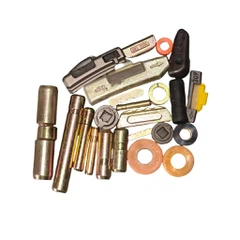

Color: Cat Yellow,or as your required
Logo: "N" logo, "FHND" logo, Customized OEM logo
Unit Weight: Welcome to inquiry
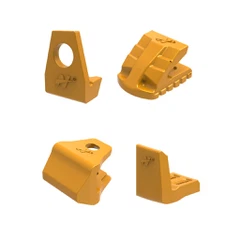
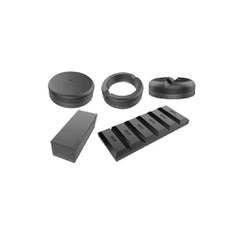
Chocky Bars and Wear Buttons
FH-ND: Your Professional Chocky Bars and Wear Buttons Manufacturer!
FH-ND was founded in 2005, located in Ningbo which is the famous city of export in China. After the development with a long history, we have become one of the famous manufacturers of ground engaging tools(G.E.T) in construction machinery and mining machinery areas. FH-ND is also an OEM and supplies high-quality wear parts to many famous companies in the world.
-
![Excavator Bucket Protection High Chrome White Iron Domite Chocky Bars CB40 CB50 CB65]()
-
![Parts Of Excavator Bucket Laminated White Iron Cast Steel Chocky Bars CB90 CB100]() Parts Of Excavator Bucket Laminated White Iron Cast Steel...Color: Cat Yellow,or as your requiredread more
Parts Of Excavator Bucket Laminated White Iron Cast Steel...Color: Cat Yellow,or as your requiredread more
Logo: "N" logo, "FHND" logo, Customized OEM logo
Unit Weight: Welcome to inquiry -
![Excavator Wear Parts Laminated Wear Buttons WB60 WB75 WB90 for Buckets]() Excavator Wear Parts Laminated Wear Buttons WB60 WB75 WB9...Color: Cat Yellow,or as your requiredread more
Excavator Wear Parts Laminated Wear Buttons WB60 WB75 WB9...Color: Cat Yellow,or as your requiredread more
Logo: "N" logo, "FHND" logo, Customized OEM logo
Unit Weight: Welcome to inquiry -
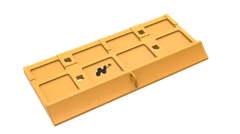
![Notched Metallic Chocky Bars for Digger CB40 CB50 CB90]() Notched Metallic Chocky Bars for Digger CB40 CB50 CB90Color: Cat Yellow,or as your requiredread more
Notched Metallic Chocky Bars for Digger CB40 CB50 CB90Color: Cat Yellow,or as your requiredread more
Logo: "N" logo, "FHND" logo, Customized OEM logo
Unit Weight: Welcome to inquiry -
![Excavator High Chrome White Iron Bucket Wear Parts Wear Bars]() Excavator High Chrome White Iron Bucket Wear Parts Wear BarsColor: Cat Yellow,or as your requiredread more
Excavator High Chrome White Iron Bucket Wear Parts Wear BarsColor: Cat Yellow,or as your requiredread more
Logo: "N" logo, "FHND" logo, Customized OEM logo
Unit Weight: Welcome to inquiry


Why Choose Us
Rich Experience
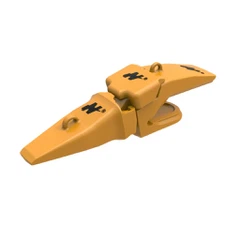
Ningbo Fenghua ND Machinery Co., Ltd. was established in 2005 and has more than 10 years of experience in the research and development of wear-resistant castings, including bucket teeth, tooth seat edge plates, and other products for construction machinery.
Broad Market
Our parts are already exported to more than 50 countries in the world, mainly to Canada, the USA, Australia, Spain, Sweden, UK, Poland, Italy, Russia, Ukraine, Saudi Arabia, Kuwait, U.A.E., Peru, Chile, Brazil, Argentina, Egypt, Sudan, Algeria, South Africa, India, Myanmar, Korea, Singapore, etc.
Wide Product Range
The company offers a comprehensive range of products, covering most of the world's excavators, bulldozers, loaders, graders, and other wear-resistant accessories.
Quality Assurance
Using self-developed high-strength, high-quality wear-resistant steel, coupled with scientific and efficient production processes and strict quality management procedures, the company ensures that its products provide customers with high quality and cost-effective solutions.
Brief Introduction to Chocky Bars and Wear Buttons
Chocky bars and wear buttons are a series of bi-metal wear plates that are always made in small-size strips or pieces. It has a hard chrome white iron on the top layer for the function of wear resistance and a mild steel plate backup which has good impact resistance and also enables the bars weldable. Chocky bars and buttons are widely used on excavator buckets, wheel loaders, crusher rotors, shredder rotor discs, and other heavy-duty equipment to protect specific harshly worn areas.
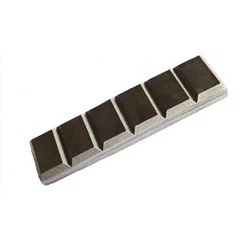
Easy to Use: Chocky Bars and Wear Buttons Advantages
Chocky bars and wear buttons are very easy to use. No excessive cutting is required unlike sheets or wear plates. There is also no preheating or post-heating when welding.
They are easy to cut and form onto the inside or outside of contoured surfaces. Calculate your own layouts and patterns as needed. The notches in the Chocky Bar assist in cutting them to size. They can also be bent to shape for the specific application.
Chocky bars and wear buttons can be used in conjunction with other wear products to give you that extra advantage. Chocky bars are metallurgically bonded with martensitic white iron bonded to a weldable, impact resistant backing plate. They have long-term wear and impact resistance when compared to other wear plates.
Chocky bars and wear buttons are manufactured with notches on the mild steel backing plate. This design allows for easy cutting and shaping to fit correctly over contoured surfaces.
Post-bonding heat treatment processes can be undertaken to test Chocky Bars. This provides maximum abrasion protection. The steel backing plate absorbs high impact and allows for ease of fitting and use.
Features of Chocky Bars and Wear Buttons
Chocky bars and wear buttons are a combination of 700 BHN chrome castings and 200 BHN mild back plates, thus granting easy welding and a high resistance to wear. Available in various sizes and shapes to protect high wear areas.
Chocky Bars:
The chocky-shape allows the composition of a mosaic pattern for high-wear applications. It suits slightly concave or convex surfaces, thus being very versatile.
Wear Buttons:
The round shape ensures extreme protection and the possibility to be welded on small areas too. It also prevents weld cracks.
Applications of Chocky Bars and Wear Buttons
Applications of Chocky Bars:
Mining: Chocky bars are commonly used to protect the buckets and blades of excavators, loaders, and dragline buckets in mining operations, where abrasive materials such as rocks and ores cause significant wear.
Construction: In the construction industry, chocky bars are employed to safeguard the edges of construction equipment, such as bulldozer blades and trencher teeth, from wear caused by contact with abrasive materials like gravel and concrete.
Quarrying: Chocky bars are utilized in quarrying applications to protect the surfaces of crushers, screens, and conveyor systems from abrasion, thereby extending their operational lifespan.
Recycling: Recycling facilities use chocky bars to reinforce the edges of shredder blades and other equipment involved in processing metal, plastic, and other recyclable materials, where wear is a common issue.
Applications of Wear Buttons:
Earthmoving and Excavation: Wear buttons are frequently used in earthmoving and excavation equipment, such as excavator buckets and ripper shanks, to protect against abrasion and impact from rocks, soil, and other abrasive materials.
Forestry: In forestry applications, wear buttons are employed on logging equipment, such as harvester heads and mulcher teeth, to withstand the abrasive effects of wood, bark, and debris.
Material Handling: Wear buttons find applications in material handling equipment, including conveyor systems and transfer chutes, where they help prevent wear and damage caused by the movement of bulk materials.
Aggregate Processing: In aggregate processing plants, wear buttons are utilized to reinforce the surfaces of crushers, screens, and hoppers, ensuring continuous operation and minimizing downtime due to wear-related issues.

How to Cut Chocky Bars
Cutting chocky bars or blocks is best done using high pressure water jets. It is not recommended to use thermal cutting procedures such as plasma cutting, arc-air, or an oxyacetylene (oxy) torch as there is a high risk of cracking and delamination due to localized heat penetration.
If the chocky bar has a section thickness at the notch of less than 25mm then it can be cut using an angle grinder, or using the following procedure:
Secure the chocky bar or block to be cut with a vice or clamp.
Notch the backing plate at the pre-existing notch.
Notch the white iron to a minimum of 3mm deep, opposite the notch in the backing plate – noting that the deeper the cut, the cleaner the chocky bar or block will break.
Wrap the chocky bar or block with a rag and gently hit it with a soft-faced mallet. It should break cleanly where you have cut the notches.
How to Form Chocky Bars
"Forming" your chocky bars is the process of bending them to match the contour of the material or machinery they are being attached to.
First, ensure both the chocky bar and the surface it will be welded to are clean and free of dirt, scale, grease, water, and paint to ensure a good surface for welding and reduce the chances of weld cracking.
The forming process then varies slightly, depending whether you are forming the chocky bar to match an inside curve or an outside curve.
Outside Curves:
- Tack weld one end of the bar in at least three places, using at least a half inch weld for each deposit.
- Using a soft face hammer, hit the unwelded end of the Chocky Bar to bend (form) the bar to match the radius of what it is protecting.
- Stitch weld the Chocky Bar into place, as per the Welding Procedure below.
Inside Curves:
- Tack weld one end of the bar in at least three places, using at least a half inch weld for each deposit.
- Starting in the centre of the Chocky Bar, hit it with a soft faced hammer to bend (form) the bar to match the radius of what it is protecting
- Stitch weld the Chocky Bar into place, as per the Welding Procedure below.
Chocky Bars and Wear Buttons Welding Instructions
Prior to commencing any welding work, a risk assessment should be carried out to identify any hazards, assess the risks associated with them, and implement risk control measures using the hierarchy of control.
Ensure both the chocky bar & wear buttons and the surface it will be welded to are clean and free of dirt, scale, grease, water, and paint to ensure a good surface for welding to reduce the chances of weld cracking.
Clamp the chocky bar and wear Buttons in place and tack weld one end in three places, using at least a half-inch weld for each deposit.
Follow the forming process outline above if required.
Stitch weld the chocky bar and wear buttons into place. Weld in runs, with each weld at least 50mm apart and at alternating ends or sides to minimise heat build-up and heat penetration. Please note that it is normal to see some cracking in your chocky bar and wear buttons during the welding process.
The maximum temperature reached during the welding process should be 200℃. Regularly use a thermal crayon or laser temperature probe to check.
Do Not:
Weld continuously which will cause the chocky bar and wear buttons to warp, delaminate, and crack.
Deposit weld within 2mm from the bond zone/joint between white iron alloy and the mild steel backing plate.
Our Factory
The company currently employs approximately 350 skilled professionals, boasting an annual output exceeding 20,000 tons.

Ultimate FAQ Guide to Chocky Bars and Wear Buttons
We're professional chocky bars and wear buttons manufacturers and suppliers in China, specialized in providing high quality customized service. We warmly welcome you to buy chocky bars and wear buttons at competitive price from our factory.
Cast Steel Chocky Bars, Chocky Bars and Wear Buttons, wear bars