



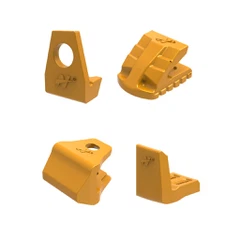
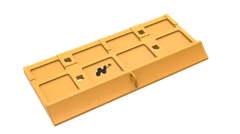



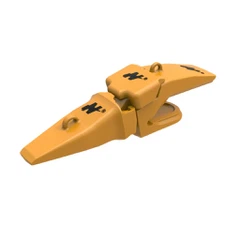


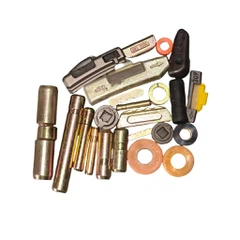

Part No.: 4T5502
Color: Cat Yellow,or as your required
Logo: "N" logo, "FHND" logo, Customized OEM logo
Unit Weight: Welcome to inquiry
Ripper Teeth
FH-ND: Your Professional Ripper Teeth Manufacturer!
FH-ND was founded in 2005, located in Ningbo which is the famous city of export in China. After the development with a long history, we have become one of the famous manufacturers of ground engaging tools(G.E.T) in construction machinery and mining machinery areas. FH-ND is also an OEM and supplies high-quality wear parts to many famous companies in the world.
-
![Cat Digger Ripper Tooth for Dozer 4T5502]()
-
![6Y0309 Cat High Strength Shank Ripper Tooth for Excavator]() 6Y0309 Cat High Strength Shank Ripper Tooth for ExcavatorPart No.: 6Y0309read more
6Y0309 Cat High Strength Shank Ripper Tooth for ExcavatorPart No.: 6Y0309read more
Color: Cat Yellow,or as your required
Logo: "N" logo, "FHND" logo, Customized OEM logo
Unit Weight: Welcome to inquiry -
![Replacement Bulldozer Ripper Teeth 6Y0359]() Replacement Bulldozer Ripper Teeth 6Y0359Name: 6Y0359 ripper toothread more
Replacement Bulldozer Ripper Teeth 6Y0359Name: 6Y0359 ripper toothread more
Color: Cat Yellow,or as your required
Logo: "N" logo, "FHND" logo, Customized OEM logo
Unit Weight: Welcome to inquiry -
![D7 D8K D9H Frost Tooth for Excavator 9W2451]() D7 D8K D9H Frost Tooth for Excavator 9W2451Part No.: 9W2451read more
D7 D8K D9H Frost Tooth for Excavator 9W2451Part No.: 9W2451read more
Color: Cat Yellow,or as your required
Logo: "N" logo, "FHND" logo, Customized OEM logo
Unit Weight: Welcome to inquiry -
![9W2452 Cat Style R450 Ripper Tooth Ripper Tip]() 9W2452 Cat Style R450 Ripper Tooth Ripper TipPart No.: 9W2452read more
9W2452 Cat Style R450 Ripper Tooth Ripper TipPart No.: 9W2452read more
Color: Cat Yellow,or as your required
Logo: "N" logo, "FHND" logo, Customized OEM logo
Unit Weight: Welcome to inquiry -
![Bulldozer D11 Digger Ripper Tooth 6Y3552]() Bulldozer D11 Digger Ripper Tooth 6Y3552Part No.: 6Y3552read more
Bulldozer D11 Digger Ripper Tooth 6Y3552Part No.: 6Y3552read more
Color: Cat Yellow,or as your required
Logo: "N" logo, "FHND" logo, Customized OEM logo
Unit Weight: Welcome to inquiry -
![Komatsu D85C Bulldozer Replacement Ripper Teeth 175-78-31230]() Komatsu D85C Bulldozer Replacement Ripper Teeth 175-78-31230Part No.: 175-78-31230read more
Komatsu D85C Bulldozer Replacement Ripper Teeth 175-78-31230Part No.: 175-78-31230read more
Color: Cat Yellow,or as your required
Logo: "N" logo, "FHND" logo, Customized OEM logo
Unit Weight: Welcome to inquiry -
![Komatsu Dozer Ripper Teeth 195-78-21331]() Komatsu Dozer Ripper Teeth 195-78-21331Part No.: 195-78-21331read more
Komatsu Dozer Ripper Teeth 195-78-21331Part No.: 195-78-21331read more
Color: Cat Yellow,or as your required
Logo: "N" logo, "FHND" logo, Customized OEM logo
Unit Weight: Welcome to inquiry -
![Komatsu Ripper Tooth Frost Teeth for Excavator 195-78-71320]() Komatsu Ripper Tooth Frost Teeth for Excavator 195-78-71320Part No.: 195-78-71320read more
Komatsu Ripper Tooth Frost Teeth for Excavator 195-78-71320Part No.: 195-78-71320read more
Color: Cat Yellow,or as your required
Logo: "N" logo, "FHND" logo, Customized OEM logo
Unit Weight: Welcome to inquiry -
![Komatsu Dozer Ripper Bucket Teeth 198-78-21340]() Komatsu Dozer Ripper Bucket Teeth 198-78-21340Part No.: 198-78-21340read more
Komatsu Dozer Ripper Bucket Teeth 198-78-21340Part No.: 198-78-21340read more
Color: Cat Yellow,or as your required
Logo: "N" logo, "FHND" logo, Customized OEM logo
Unit Weight: Welcome to inquiry -
![Replacement Ripper Shank Noses And Adapters 1U3630 Fits Caterpillar]() Replacement Ripper Shank Noses And Adapters 1U3630 Fits C...Part No.: 1U3630read more
Replacement Ripper Shank Noses And Adapters 1U3630 Fits C...Part No.: 1U3630read more
Color: Cat Yellow,or as your required
Logo: "N" logo, "FHND" logo, Customized OEM logo
Unit Weight: Welcome to inquiry -
![Replacement Grader Scarifier Ripper Teeth 6Y5230]() Replacement Grader Scarifier Ripper Teeth 6Y5230Part Number: 6Y5230read more
Replacement Grader Scarifier Ripper Teeth 6Y5230Part Number: 6Y5230read more
Color: Cat Yellow,or as your required
Logo: "N" logo, "FHND" logo, Customized OEM logo
Unit Weight: Welcome to inquiry


Why Choose Us
Rich Experience
Ningbo Fenghua ND Machinery Co., Ltd. was established in 2005 and has more than 10 years of experience in the research and development of wear-resistant castings, including bucket teeth, tooth seat edge plates, and other products for construction machinery.
Broad Market
Our parts are already exported to more than 50 countries in the world, mainly to Canada, the USA, Australia, Spain, Sweden, UK, Poland, Italy, Russia, Ukraine, Saudi Arabia, Kuwait, U.A.E., Peru, Chile, Brazil, Argentina, Egypt, Sudan, Algeria, South Africa, India, Myanmar, Korea, Singapore, etc.
Wide Product Range
The company offers a comprehensive range of products, covering most of the world's excavators, bulldozers, loaders, graders, and other wear-resistant accessories.
Quality Assurance
Using self-developed high-strength, high-quality wear-resistant steel, coupled with scientific and efficient production processes and strict quality management procedures, the company ensures that its products provide customers with high quality and cost-effective solutions.
Brief Introduction to Ripper Teeth
A ripper tooth concentrates all the power of the machine onto the small endpoint, maximizing the penetration force into very compact surfaces - which a Standard Digging Bucket would struggle to break up. As well as being used for penetrating and breaking up very hard ground, ripper teeth are also very good for digging out stubborn items such as rocks and tree roots buried in the ground. The best way to use the ripper tooth is by using it to break up the ground first, then use your digging bucket to dig as you usually would.
Features of Ripper Teeth
Feature 1: Heavy Duty Construction
The first, and one of the most important features of the ripper tooth, is its heavy duty construction. If you're looking to purchase a Ripper Tooth then you know that they're going to be used in extremely harsh conditions to rip up and remove tough objects stuck in the ground or to break up rough and compact terrain. So this obviously means they need to be strong enough to withstand these environments. A tab-lock design means that the attachment is cut out of steel in sections, slotted together like a jigsaw, and welded into position to hold the whole structure together. Each section has tabs and holes that match up to create a strong, tight seal.
Feature 2: Wear Protection
To ensure your ripper tooth lasts as long as possible, the tooth and adaptor are hardened to 550 HB (Hardened Brinell). This steel is extremely resistant to harsh, abrasive environments like when breaking through compact rock and trying to remove tree stumps buried in the ground. This level of hardness is essential for areas that experience the most amount of wear, in this case the tooth of the Ripper Hook. The tooth is also manufactured with serrated edges to improve the digging and penetration performance. The serrated edges act similarly to a serrated knife, increasing the efficiency of cutting through material. On our larger range of Ripper Teeth, 12 to 25 tons, we manufacture the shank with additional layers of steel which are welded to the outside to add an additional layer of protection and help reduce the speed of wear. Ripper Teeth this size are like to be used for extremely heavy duty projects, like in quarries to break up rocks, so we're added this extra protection to make sure your ripper lasts as long as possible.
Feature 3: Replaceable Tooth
Your ripper tooth is designed to last as long as possible, especially with the heavy duty construction and the hardened cast steel tooth. But alongside these features, the tip of your ripper tooth is also replaceable! It is inevitable that the tooth will wear because of the abrasive material, so to help you prolong the life of your attachment we have made sure that this tip is replaceable. When the serrations start to wear away or it becomes broken during use, you can easily remove the tip of the ripper and replace it with a new one.
Feature 4: Bolt-in Pins
Another huge benefit of the ripper tooth is that our 2-pin hangers come with bolt-in pins as standard. Bolt-in pins are straightforward to fit and replace. Once worn, they are easy to remove, compared to buckets and attachments with weld-in pins which will need the pins grinding out and rewelding. Sometimes the entire hanger bracket will need replacing depending on the wear. Bolt-in pins in your ripper tooth also means you can directly mount your attachment to any machine on the same pin dimensions. If your ripper had weld-in pins, you wouldn't be able to take them out to mount them to your machine, you would only be able to use it with a quick hitch/coupler.
Best Uses for Your Excavator Ripper Teeth
Best Use 1: Breaking up Solid or Frozen Ground
One of the best and most common uses for the excavator ripper tooth is to break up solid or frozen ground. The ripper is most commonly used in quarries and construction projects to break up material before removal. The narrow serrated tooth on the end of the ripper is extremely efficient at tearing through compact dirt and rocks, where your digging bucket would struggle to penetrate. Pushing all the power of your machine through the smaller ripper tip concentrates the force exerted into the ground, in comparison to the power being distributed across multiple teeth on your standard digging bucket.
Imagine standing on grass in stiletto heels versus in sneakers. Because all of the weight is pushed through the small end point, the stiletto heel will sink into the ground. Whereas, you can easily walk across the same grass in sneakers because the pressure is evenly distributed across a wider surface. This is the same concept for the ripper tooth penetrating materials. This therefore makes the excavator ripper attachment an incredibly quick and efficient way to penetrate compact ground and break it into smaller pieces, ready to be removed with your digging or grading bucket.
Best Use 2: Removing Tree Stumps
As well as breaking up compact ground, the excavator ripper tooth is also extremely effective at helping to remove tree stumps and other similar items, like old water pipes, from the ground. The hardened tooth helps break up the hard material around the object, with the curved shank adding power by acting as a leaver to wedge under the object to dislodge it from the ground.
When removing tree stumps, the size of your excavator and ripper tooth you need will be determined by multiple factors. These include the size of the tree stump, the depth of the roots, the conditions of the ground material and the amount of space surrounding your working area. The bigger the stump and working area, the bigger the excavator and ripper attachment you will need. Before using your ripper to tear out the tree stump, you will have to dig a trench around the circumference of the stump so the roots can be accessed and removed. When the roots are exposed, you will then be able to use your ripper tooth to rip, lever and dislodge the roots and stump from the ground.
Best Use 3: Tearing up Patios and Concrete Slabs
We regularly see customers using their digging and grading buckets to tear up or remove patio pavers and concrete slabs. Although this may seem effective it can be extremely damaging to the structural integrity of your bucket. The immense power and force required to dislodge these objects can cause the bucket welds to break, alongside snapping the bucket teeth and bending the lip plate. This is where the excavator ripper tooth comes into its own.
As previously mentioned, the ripper tooth attachment is designed with extreme force in mind. The thick steel shank and hardened tip are designed to withstand the level of force required for these removal jobs. The curved shank is also ideal for levering of material. The serrated tip of the ripper can be positioned under the edge of the patio paver or concrete slab you're trying to remove, using the power of the machine and the force exerted through the tip to lever items away from the base. Although these attachments are manufactured with a hardened tip, these jobs can be extremely wearing so replacing the tip once the serration has worn away will ensure you remain as efficient as possible during your projects.
How to Choose the Right Excavator Ripper Teeth
If you own an excavator, you know how useful it is for construction, demolition, and landscaping projects. However, your excavator's performance depends on the quality of its attachments. The ripper tooth is an essential attachment that you need to break and loosen up tough soil, rock, and concrete surfaces. Choosing the right mini excavator ripper tooth can improve your machine's efficiency and productivity.
Understand Your Project Needs
Before choosing a mini excavator ripper tooth, you need to assess your project needs. You need to determine the type of material you will be working with, the hardness of the ground, and the depth of excavation required. This information will help you choose the right ripper tooth that will perform efficiently and effectively in your project.
Type of Material
The type of material you will be working with is essential in determining the type of ripper tooth to use. For instance, if you are working with rocky surfaces, you need a ripper tooth with a pointed tip to penetrate through the rock surfaces. However, if you are working with soil surfaces, you need a ripper tooth with a flat tip to loosen up the soil.
Ground Hardness
How to Choose the Right Mini Excavator Ripper Tooth.The ground hardness is crucial in determining the strength and durability of the ripper tooth. If you are working with hard and compact surfaces, you need a ripper tooth with a higher tensile strength and wear-resistant properties. On the other hand, if you are working with soft and loose surfaces, you need a ripper tooth with a lower tensile strength to avoid damaging the surface.
Depth of Excavation
The depth of excavation is essential in determining the length and width of the ripper tooth. If you are working on shallow surfaces, you need a shorter ripper tooth. However, if you are working on deep surfaces, you need a longer ripper tooth to penetrate through the ground.
Choose the Right Ripper Tooth Type
Once you understand your project needs, you need to choose the right ripper tooth type that will match your excavator's weight and size. The most common types of ripper teeth are:
Single Shank Ripper Tooth
The single shank ripper tooth is the most common type of ripper tooth that is suitable for excavators with a weight of 4 to 45 tons. It has a single shank that penetrates through hard surfaces and breaks them into small pieces.
Multi-Shank Ripper Tooth
The multi-shank ripper tooth is suitable for excavators with a weight of 40 to 90 tons. It has multiple shanks that penetrate through hard surfaces and create a wider breaking area.
Grading Ripper Tooth
The grading ripper tooth is suitable for excavators with a weight of 5 to 25 tons. It has a flat tip that is used for grading and leveling surfaces.
Consider the Ripper Tooth Material
How to Choose the Right Mini Excavator Ripper Tooth.The ripper tooth material is crucial in determining its strength and durability. The most common ripper tooth materials are:
Steel
Steel ripper teeth are the most common type of ripper tooth material. They are suitable for standard construction and excavation projects. However, they are not suitable for abrasive and high-impact projects.
Carbide
Carbide ripper teeth are suitable for abrasive and high-impact projects. They have a high wear-resistant property and can withstand extreme temperatures. However, they are expensive compared to steel ripper teeth.
Cast Iron
Cast iron ripper teeth are suitable for light excavation and construction projects. They are cheaper compared to steel and carbide ripper teeth. However, they have lower tensile strength and wear-resistant properties compared to steel and carbide ripper teeth.
Check the Ripper Tooth Size
The size of the ripper tooth is crucial in ensuring that it fits your excavator. You need to consider the length, width, and thickness of the ripper tooth. The ripper tooth size should match your excavator's weight, size, and hydraulic power. You should also check the pin diameter, pin center distance, and pin-to-tip distance to ensure that it fits your excavator's coupler.
Consider the Ripper Tooth Brand and Price
The brand and price of the ripper tooth are essential in determining its quality and durability. You should choose a reputable brand that offers high-quality ripper teeth. You should also compare the prices of different ripper teeth to get the best deal that fits your budget.
Maintain the Ripper Tooth
Maintaining the ripper tooth is crucial in ensuring its longevity and efficiency. You should follow the manufacturer's maintenance guidelines to keep the ripper tooth in good condition. You should also inspect the ripper tooth regularly for any signs of wear and tear and replace it if necessary.
Our Factory
The company currently employs approximately 350 skilled professionals, boasting an annual output exceeding 20,000 tons.

Ultimate FAQ Guide to Ripper Teeth
We're professional ripper teeth manufacturers and suppliers in China, specialized in providing high quality customized service. We warmly welcome you to buy ripper teeth at competitive price from our factory.
Ripper Teeth