



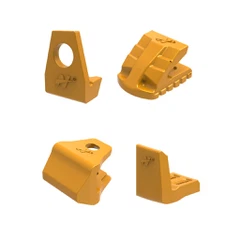





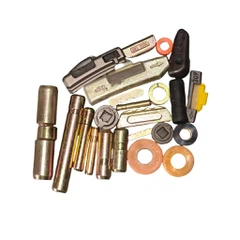

Part No.: 207-70-14151
Color: Cat Yellow,or as your required
Logo: "N" logo, "FHND" logo, Customized OEM logo
Unit Weight: Welcome to inquiry
Komatsu Bucket Teeth
FH-ND: Your Professional Komatsu Bucket Teeth Manufacturer!
FH-ND was founded in 2005, located in Ningbo which is the famous city of export in China. After the development with a long history, we have become one of the famous manufacturers of ground engaging tools(G.E.T) in construction machinery and mining machinery areas. FH-ND is also an OEM and supplies high-quality wear parts to many famous companies in the world.
-
![207-70-14151 Komatsu Style PC300 Excavator Bucket Tips Bucket Teeth]()
-
![Komatsu Track Shoe/Grouser Shoe 20T-32-77410 20T-32- 41210 201-32-15111]() Komatsu Track Shoe/Grouser Shoe 20T-32-77410 20T-32- 4121...Part No.: 20T-32-77410 20T-32- 41210 201-32-15111read more
Komatsu Track Shoe/Grouser Shoe 20T-32-77410 20T-32- 4121...Part No.: 20T-32-77410 20T-32- 41210 201-32-15111read more
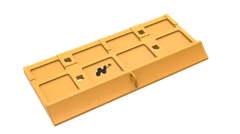
Color: Yellow, or as required
Logo: "N" logo, "FHND" logo, Customized OEM logo
Unit Weight: Welcome to inquire -
![Komatsu Weld-on Center Adapter 1040P025 1050P040]() Komatsu Weld-on Center Adapter 1040P025 1050P040Part No.:Komatsu Weld-on Center Adapter 1040P025 1050P040read more
Komatsu Weld-on Center Adapter 1040P025 1050P040Part No.:Komatsu Weld-on Center Adapter 1040P025 1050P040read more
Color: Standard Cat Yellow; custom color available per your request
Logo: Optional "N" mark, "FHND" mark or customized OEM... -
![209-70-54210 Replacement Parts Komatsu PC650 Tooth]() 209-70-54210 Replacement Parts Komatsu PC650 ToothPart No.:209-70-54210 Replacement Parts Komatsu PC650 Toothread more
209-70-54210 Replacement Parts Komatsu PC650 ToothPart No.:209-70-54210 Replacement Parts Komatsu PC650 Toothread more
Color: Yellow, or as required
Logo: "N" logo, "FHND" logo, Customized OEM logo
Unit Weight: Welcome to inquire -
![419-71-H2310 Komatsu Replacement Tooth Point]() 419-71-H2310 Komatsu Replacement Tooth PointPart No.:419-71-H2310 Komatsu Replacement Tooth Pointread more
419-71-H2310 Komatsu Replacement Tooth PointPart No.:419-71-H2310 Komatsu Replacement Tooth Pointread more
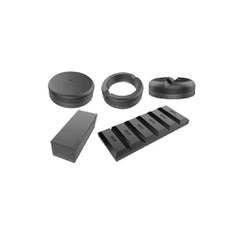
Color: Black,Yellow, or as required
Logo: "N" logo, "FHND" logo, Customized OEM logo
Unit Weight: Welcome to inquire -
![419-70-13164 WA250 Komatsu Loader Wear Parts Bucket Tooth]() 419-70-13164 WA250 Komatsu Loader Wear Parts Bucket ToothPart No.:419-70-13164 WA250 Komatsu Loader Wear Parts Bucket Toothread more
419-70-13164 WA250 Komatsu Loader Wear Parts Bucket ToothPart No.:419-70-13164 WA250 Komatsu Loader Wear Parts Bucket Toothread more
Color: Cat Yellow,or as your required
Logo: "N" logo, "FHND" logo, Customized OEM logo
Unit Weight: 14.1KG -
![207-70-14280 Standard PC350 Komatsu Bucket Point Tooth]() 207-70-14280 Standard PC350 Komatsu Bucket Point ToothPart No.:207-70-14280 Standard PC350 Komatsu Bucket Point Toothread more
207-70-14280 Standard PC350 Komatsu Bucket Point ToothPart No.:207-70-14280 Standard PC350 Komatsu Bucket Point Toothread more
Color: Cat Yellow,or as your required
Logo: "N" logo, "FHND" logo, Customized OEM logo
Unit Weight: 9.2KG -
![202-70-12130 N1 Komatsu DRP Excavator Bucket Tip]() 202-70-12130 N1 Komatsu DRP Excavator Bucket TipPart No.:202-70-12130 N1 Komatsu DRP Excavator Bucket Tipread more
202-70-12130 N1 Komatsu DRP Excavator Bucket TipPart No.:202-70-12130 N1 Komatsu DRP Excavator Bucket Tipread more
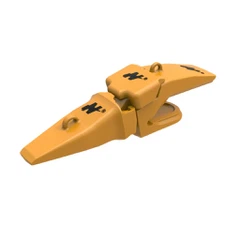
Color: Cat Yellow,or as your required
Logo: "N" logo, "FHND" logo, Customized OEM logo
Unit Weight: 4KG -
![10E-70-22211PC10 PC15 PC20 PC50 Komatsu Bolt Type Tooth]() 10E-70-22211PC10 PC15 PC20 PC50 Komatsu Bolt Type ToothPart No.: 10E-70-22211PC10 PC15 PC20 PC50 Komatsu Bolt Type Toothread more
10E-70-22211PC10 PC15 PC20 PC50 Komatsu Bolt Type ToothPart No.: 10E-70-22211PC10 PC15 PC20 PC50 Komatsu Bolt Type Toothread more
Color: Cat Yellow,or as your required
Logo: "N" logo, "FHND" logo, Customized OEM logo
Unit Weight: Welcome... -
![20T-70-13130 SX130 Yanmar Komatsu Unitooth Tip]() 20T-70-13130 SX130 Yanmar Komatsu Unitooth TipPart No.:20T-70-13130 SX130 Yanmar Komatsu Unitooth Tipread more
20T-70-13130 SX130 Yanmar Komatsu Unitooth TipPart No.:20T-70-13130 SX130 Yanmar Komatsu Unitooth Tipread more
Color: Cat Yellow,or as your required
Logo: "N" logo, "FHND" logo, Customized OEM logo
Unit Weight: Welcome to... -
![E27 312204054 42N-833-1390 Komatsu VERTICAL Tooth]() E27 312204054 42N-833-1390 Komatsu VERTICAL ToothPart No.:E27 312204054 42N-833-1390 Komatsu VERTICAL Toothread more
E27 312204054 42N-833-1390 Komatsu VERTICAL ToothPart No.:E27 312204054 42N-833-1390 Komatsu VERTICAL Toothread more
Color: Cat Yellow,or as your required
Logo: "N" logo, "FHND" logo, Customized OEM logo
Unit Weight: Welcome to... -
![A60 PC60 Komatsu Dirt Bucket Tooth]() A60 PC60 Komatsu Dirt Bucket ToothPart No.:A60 PC60 Komatsu Dirt Bucket Toothread more
A60 PC60 Komatsu Dirt Bucket ToothPart No.:A60 PC60 Komatsu Dirt Bucket Toothread more
Color: Cat Yellow,or as your required
Logo: "N" logo, "FHND" logo, Customized OEM logo
Unit Weight: KG


Why Choose Us
Rich Experience
Ningbo Fenghua ND Machinery Co., Ltd. was established in 2005 and has more than 10 years of experience in the research and development of wear-resistant castings, including bucket teeth, tooth seat edge plates, and other products for construction machinery.
Broad Market
Our parts are already exported to more than 50 countries in the world, mainly to Canada, the USA, Australia, Spain, Sweden, UK, Poland, Italy, Russia, Ukraine, Saudi Arabia, Kuwait, U.A.E., Peru, Chile, Brazil, Argentina, Egypt, Sudan, Algeria, South Africa, India, Myanmar, Korea, Singapore, etc.
Wide Product Range
The company offers a comprehensive range of products, covering most of the world's excavators, bulldozers, loaders, graders, and other wear-resistant accessories.
Quality Assurance
Using self-developed high-strength, high-quality wear-resistant steel, coupled with scientific and efficient production processes and strict quality management procedures, the company ensures that its products provide customers with high quality and cost-effective solutions.
Brief Introduction to Komatsu Bucket Teeth
Komatsu bucket teeth may seem like a small component of an excavator, but they play a crucial role in the efficiency and productivity of these powerful machines. These mighty teeth are responsible for digging into tough terrain, tearing through rocks and soil with ease. Bucket teeth are heavy duty metal spikes that attach to the bottom, or lip, of a bucket attachment. Properly selected bucket teeth enhance your machine's ability to dig into heavily compacted soil or rocky terrain. Compared to a simple bucket without teeth, using a bucket with teeth can reduce strain on your machine and improve its digging capacity. Bucket teeth are available in a variety of designs intended for specific applications. Each design has its own strengths and weaknesses, and maintenance requirements vary between the designs.
Advantages of Komatsu Bucket Teeth
The right choice of Komatsu bucket teeth can impact the overall efficiency of your construction projects. Some of the key benefits of equipping your machinery with high-quality bucket teeth tailored to suit the requirements of your compact equipment include:
Enhanced Digging and Grading Capabilities
Selecting the right bucket teeth can have a significant impact on the digging and grading performance of compact equipment. By doing so, operators can achieve superior digging and grading results, reducing the need for rework and improving the overall quality of construction projects.
Extended Durability
Under harsh conditions, the wrong type of bucket teeth could quickly wear down or break, resulting in frequent replacements and/or increased downtime. But with the proper selection of high-quality bucket teeth designed for heavy-duty applications, compact equipment can withstand the rigors of the job while minimizing maintenance costs associated with tooth replacements.
Improved Efficiency and Productivity
To achieve optimal results, different construction tasks require specific types of bucket teeth. Using the right bucket teeth will keep your compact machine from breaking down due to excessive stress. This increased efficiency translates into improved productivity and shorter project timelines.
Versatility and Adaptability
Bucket teeth are available in a variety of configurations, each tailored to specific applications and soil conditions. This versatility allows greater operational flexibility and improved performance across multiple construction projects.

Different Types of Komatsu Bucket Teeth
Loader Teeth:
Loader bucket teeth generally face greater wear on the underside of the teeth due to the way the loader operates in service.
Loader Abrasion Teeth: The most common bucket tooth used in loaders, loader abrasion teeth have extra material strategically positioned on the bottom of the tooth to deal with the increased abrasion they face.
General Purpose Loader Bucket Teeth: These teeth have a combination of features making them good all-rounders. They penetrate fairly well, are not too heavy and have decent abrasion resistance making them a popular choice.
Excavator Teeth:
There are a larger range of excavator teeth profiles available than loader teeth, to suit the more varied nature of the work they perform.
Excavator Abrasion Teeth: With extra wear material to accommodate extreme digging conditions, excavator abrasion teeth are designed specifically for digging into abrasive material such as sand, limestone, and possibly rock – although a short tooth may be better suited to rock to minimise breakages.
General Purpose Excavator Bucket Teeth: With a combination of features making them good all-rounders, these teeth penetrate well, are not too heavy and can tolerate abrasive conditions. If your digging conditions are changing often, this is the best tooth for you. However, if your digging conditions will remain static, a more specialised bucket tooth profile will be a better option.
Excavator Penetration Teeth: A longer, thinner style of bucket tooth that is excellent for digging into compacted dirt. Penetration teeth will also dig easily through rock and other abrasive material, however, are generally not recommended for this application as breakages will be common.
Excavator Chisel Teeth: Sitting between penetration and general purpose, chisel teeth are generally narrow at the tip to assist with penetration however have more material through the casting to increase their lifespan in tougher conditions.
Heavy Duty Excavator Teeth: Designed for hard digging, including into rock, heavy duty teeth have more wear material in the areas where you need it to keep you digging longer.
Twin Tiger Excavator Teeth: These two-pronged bucket teeth are good for penetration and popular for digging ditches and trenches. However, given the two-pronged profile, they are susceptible to breakages if they hit rock at the front.
Machines Used with Komatsu Bucket Teeth
Komatsu bucket teeth can be used on a variety of wheeled heavy equipment to accomplish challenging construction and excavation tasks. Whether you should use bucket teeth with your machine depends on your application and the terrain you're working in.
Many machines are commonly used with bucket teeth:
Excavators use buckets with teeth for extra digging power while undertaking tasks like trenching, mining, demolition or dredging.
Mini Excavators can make use of buckets and bucket teeth for common tasks like clearing land or digging foundations.
Skid Steers are frequently used with buckets and bucket teeth to clear soil with roots and other tightly compacted surfaces.
Backhoes need buckets and bucket teeth in order to dig into hard surfaces like frost or hardpan.
Loaders use buckets and bucket teeth for numerous applications like demolition, farming, mining and waste management.
Tractors make use of buckets with teeth for a wide range of activities, such as preparing rocky soil for farming or clearing brush and vegetation.
Telehandlers can be fitted with bucket attachments and used to transport loose materials. Oftentimes, a bucket attachment may be used with a telehandler in sectors like agriculture to move bulk quantities of grain or feed.
How to Choose the Right Komatsu Bucket Teeth
You know what they say, a farmer is only as good as their tools, and bucket teeth are a huge part of getting the most out of your machine. The teeth that come with your Ground Engaging Tool may seem like a miniscule part in the grand scheme of things, but they can have a big impact on the excavation work. It is important that you have the right type of Excavator Bucket Teeth for the right piece of equipment for the right job. Unfortunately, when purchasing an excavator bucket, you are usually provided with the teeth and adapter supplied by the manufacturer. Some companies opt for the cheapest excavator teeth possible to keep costs down and profits up, leaving you with equipment that is prone to breaking, doesn't work efficiently, and may not even suit your type of work at all. Although bucket teeth are only small components in huge machines, a broken tooth can bring you entire operation to a halt. Choosing the perfect bucket teeth for your machine and your desired job can increase efficiency, promote longevity, and reduce the stress put on your machine.
So, how exactly do you choose the correct excavator teeth for the job?
Manufacturing Process - One of the first things to consider when shopping around for Komatsu bucket teeth is the manufacturing process. The construction of the product will ultimately determine how long it will last, how efficient it will be, the quality of its output, and its strength. In the modern day and age, the majority of bucket teeth are manufactured in third-world countries due to costing reasons. The heat treatment process during manufacturing can affect the wear life, as can the casting process and the moulds used. What you are looking for is a manufacturer or bucket teeth supplier with a good track record and good reviews of strong, long-lasting teeth.
Material - In general, the harder the material that the tooth is made out of, the greater its strength, and resistance against things such as wear and tear, abrasion, and stress. The harder the material, the longer the lifespan of the tooth. There are now modern techniques that combine certain strong materials like austempered ductile iron with special manufacturing, heating, and casting techniques to produce robust but light extraction teeth. These are perfect for medium to high impact digging. Certain materials, such as the ductile iron, are also more resistant to sand, gravel, and rock work, as the broad tip cuts through harder, tightly-packed material.
Wear Life - It is important to remember that they very day-to-day job of these excavator teeth is to come into rough contact with other materials, whether it be sand, rocks, dirt, or anything else. Therefore, strength is a key criteria for your bucket teeth. The wear life can be impacted by abrasive sand and other materials, depending on the quartz content. Larger wear surface teeth with last longer before breaking or losing strength, but may be less efficient when working with hard ground.
Penetration - The efficiency of a bucket tooth is often measured by the surface area that actually penetrates the ground. Extra power will be needed from the excavator if the bucket tooth is very wide, blunt, or has a balled surface area. Of course, extra power brings with it more stress on the machine in general, as well as a greater fuel consumption. Self-sharpening teeth now exist to sharpen themselves as they excavate, thus maintaining efficiency. Twin Tiger Teeth, or other sharp variants of bucket teeth, are needed in order to break into hard, tight, and compact ground, including rocky terrain and frozen dirt. The bucket can then power through the material in question with greater ease, making sharp teeth ideal for digging/trenching. However, the sharper the teeth, the shorter the lifespan. They also do not have the ability to create a smoother hole or trench as a blunt tooth could do.
Impact - If you need bucket teeth that can withstand high breakout forces, then you will need to look for those with high impact resistance. These types of teeth are often used when using a machine to dig in hard, rocky, quarry-based areas. However, the correct teeth to adapter partnership is needed for this kind of work, or else the pressure will be pushed back onto the pin, often leading to breakages.
Best Practices for Maintaining Komatsu Bucket Teeth
- Perform regular inspections to identify any signs of wear, tear, or damage.
- Check for any loose teeth, which may indicate that it is probably time to change the pin or tooth.
- Utilize the bucket teeth only for the proper applications.
- Thoroughly clean after each use to remove any debris, dirt, or soil that may have accumulated on the teeth.
- Maintain their cutting ability by sharpening the teeth.
- Ensure proper lubrication with genuine fluids.
- Store properly when not in use to keep the teeth organized and protected.
- Replace them when they have excess wear and have lost their original profile to prevent further damage to the machine.
- Whenever bucket teeth are replaced, remember to replace their pins as well.
- Schedule professional maintenance inspections at recommended intervals.

Our Factory
The company currently employs approximately 350 skilled professionals, boasting an annual output exceeding 20,000 tons.

Ultimate FAQ Guide to Komatsu Bucket Teeth
We're professional komatsu bucket teeth manufacturers and suppliers in China, specialized in providing high quality customized service. We warmly welcome you to buy komatsu bucket teeth at competitive price from our factory.
reinforcing quality bucket teeth, responding to demands bucket teeth, industrial grade bucket teeth